

Blast from the Past
Blast from the Past: driving the world-beating Caterham 7 JPE
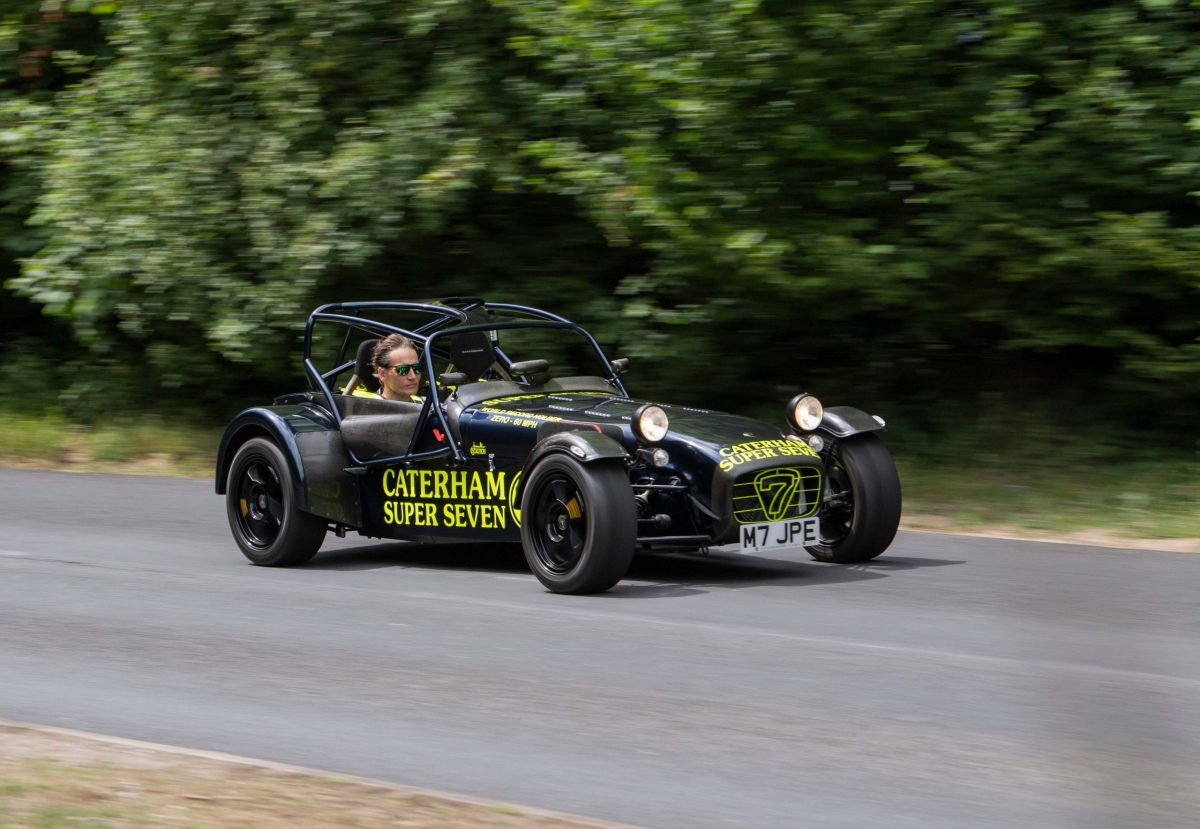
There are cars that thrill, and then there’s the Caterham 7 JPE: a machine so stripped‑back, so raw, and so astonishingly quick that in 1993 it redefined what a humble sports car maker working out of a glorified shed in Dartford could achieve on the world stage.
Born from a passionate moment in Caterham’s history, the JPE – Jonathan Palmer Evolution – isn’t just a Seven with a potent engine. It’s the product of a culture where enthusiasm and expertise trumped spreadsheets, focus groups and bean‑counters.
A world-beater from Dartford
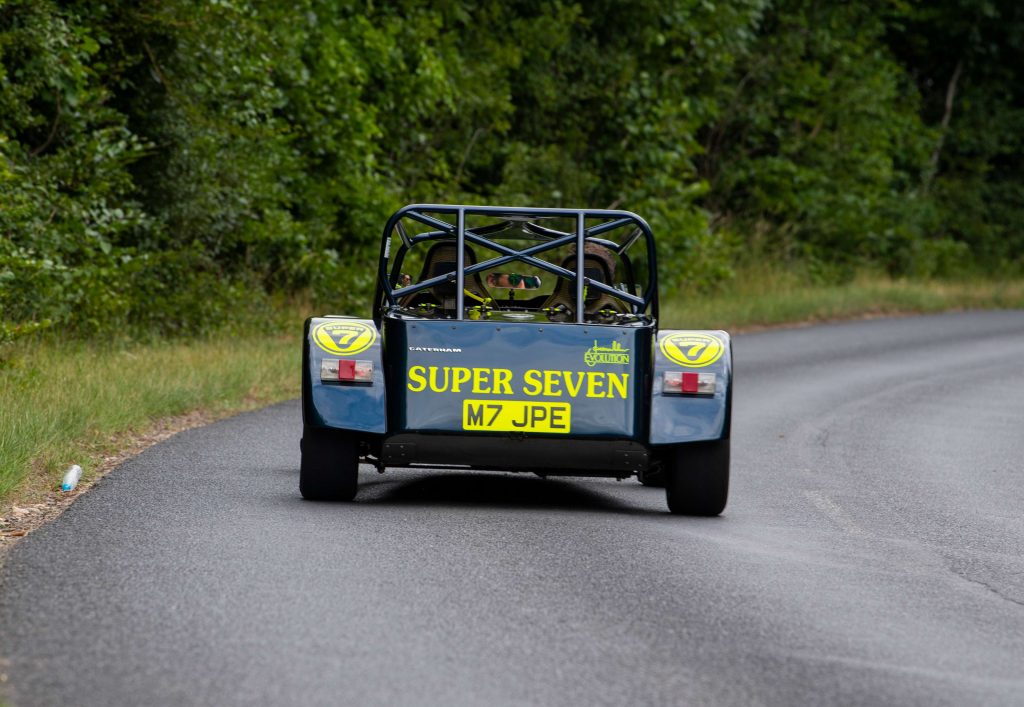
In March 1993, the now defunct Fast Lane magazine sent Mark Hales, a respected journalist and racing driver, to Millbrook proving ground's mile straight to do one simple but seemingly impossible thing: extract a world-record acceleration run from the new Caterham 7 JPE. Impossible, because how would a little thing like that, with its 2-litre, naturally aspirated four-pot motor humble twin-turbo giants like the Ferrari F40 and Jaguar XJ220?
Performing the perfect acceleration run from a standstill probably sounds easy-peasy to today's sports car drivers spoiled by a suite of electronically controlled hardware and software that do their bidding like that poor personal assistant from The Devil Wears Prada. Just select Launch Control mode and let the car do the rest… But the 7 (well, Seven, technically) was devoid of such fripperies. Achieving the perfect standing start was all down to man and machine: settle the revs of the 2-litre Vauxhall engine at just the right spot, play with the bite of the clutch and decide whether to slip it delicately or just drop it, brutally, like kicking a rugby ball to touch, then launch the JPE hell-for-leather off the line. There was no gearchange to make, because first had been geared to run to 66mph, and it was the run to 60mph that Hales cared about.
In the end, after all manner of trial and error, nasty smells from the clutch, wincing from the passenger and chunks of rubber from the disintegrating Yokohama back tyres, man and machine found a perfect harmony and the 7 surged off the line with every explosion of energy it could muster, setting a new Guinness World Record for the fastest accelerating, unmodified production car over the 0-60mph benchmark. Its time of 3.46 seconds was the fastest yet for an unmodified production car.
It’s an almost absurd achievement when you consider this was done in a comparatively cheap car that was built by a company operating out of a shed not far from the M25 motorway's Dartford Crossing. Even more remarkable? Before the record moved on, the first car to eclipse the JPE was the McLaren F1.
The story behind the Caterham 7 JPE
The story of the JPE starts not in a boardroom but the workshop. At a time when Caterham wasn’t beholden to rigid development cycles, the company’s technical and sales and marketing bosses had the freedom to innovate. It was also a moment to celebrate the end of the supply of the non-catalyst four-cylinder, 16-valve Vauxhall engine that it had been using for its fastest models. With support from company owner Graham Nearn, they set out to create the most extreme Seven possible.
“It was a different environment," recalls Andy Noble, the former sales and marketing director for Caterham. "In those days we used to stay behind at work and mess around with cars and build stuff. We used to go racing and we’d work on a car till midnight, bolt it together, come in at six in the morning, stick it on a trailer and go racing, come back on Saturday night and just put it back in the workshop. There was no accounting for parts, there was no costing it, there was there was none of that; we just cracked on with it. And whilst that sounds scary in today’s climate, the company made a good profit and as long as Graham was happy we were left to crack on with it.”
Nearn, recalls Noble, rarely shared the accounts with those around him. So when Noble suggested the idea of creating both the most affordable, simple Seven yet, and the most extreme, high-performance derivative, there were no presentations, no development cost meetings and no need for sales forecasts. Nearn simply told Noble and Coates (they sound like a Caterham double act, and they really were) to go for it.
And they duly did. “It’s not like you got a business proposition, or, ‘Right, we’ve got to sell 40 of these to pay for development,’ because development was in a shed banging these things together. We bought in each engine, we bought in the gearbox, had the best tyres, so it was just a case of putting it all together,” remembers Noble.
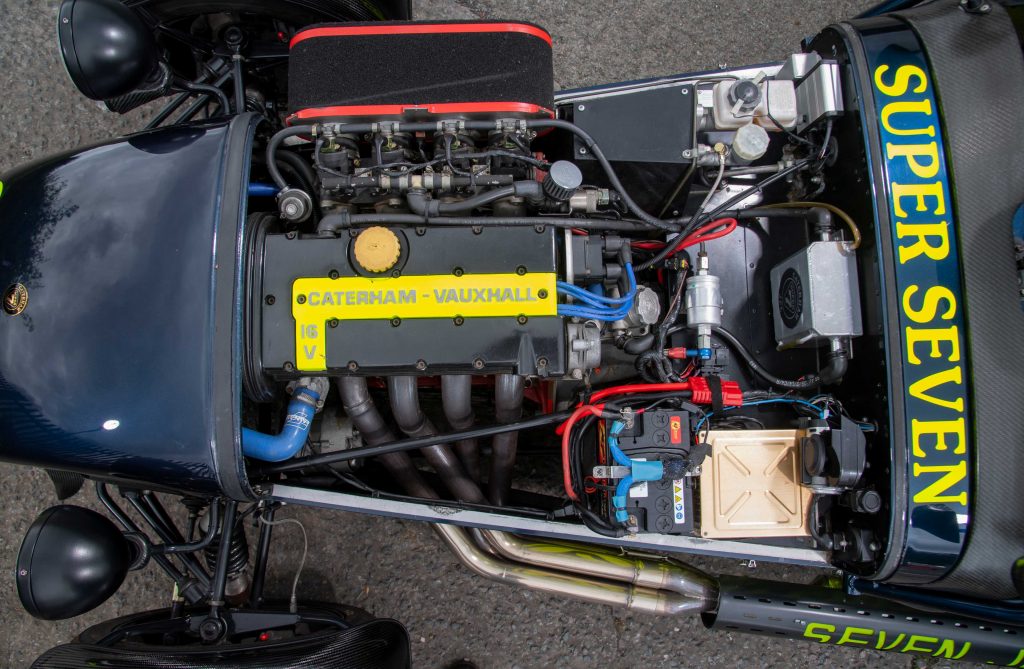
The key was a tuned 2‑litre Vauxhall engine built by Swindon Racing Engines, the same company that provided racing engines for the Vauxhall in the British Touring Car Championship, producing upwards of 250bhp in a chassis barely tipping the scales at around 515kg. The result was a performance envelope quite unlike anything of the time. But it came at a cost. Each engine is reputed to have cost £13,000, partly explaining why a 7 JPE was so damned expensive – at £34,950 (more than £76,000 in today's money), twice the price of the next nearest model.
Coming up with a name for this new model involved a Formula One driver crashing…
Noble explains how the relationship with Jonathan Palmer was established. Initially, Palmer approached Caterham about lending demonstration cars to support his fledgling PalmerSport driving experience business, which he launched in 1991 after walking away from Tyrell and Formula One, at the end of ‘89. He and Noble had previously met at a Ford corporate day, racing against one another on quad bikes, Palmer crashing off and later suggesting he had gifted the guest, Noble, the win. Ultimately the chance encounter laid the foundations for the JPE.
“There was no fee involved,” adds Noble, another reminder of how this is a car born of different times.
Driving experience: ferocious yet honed
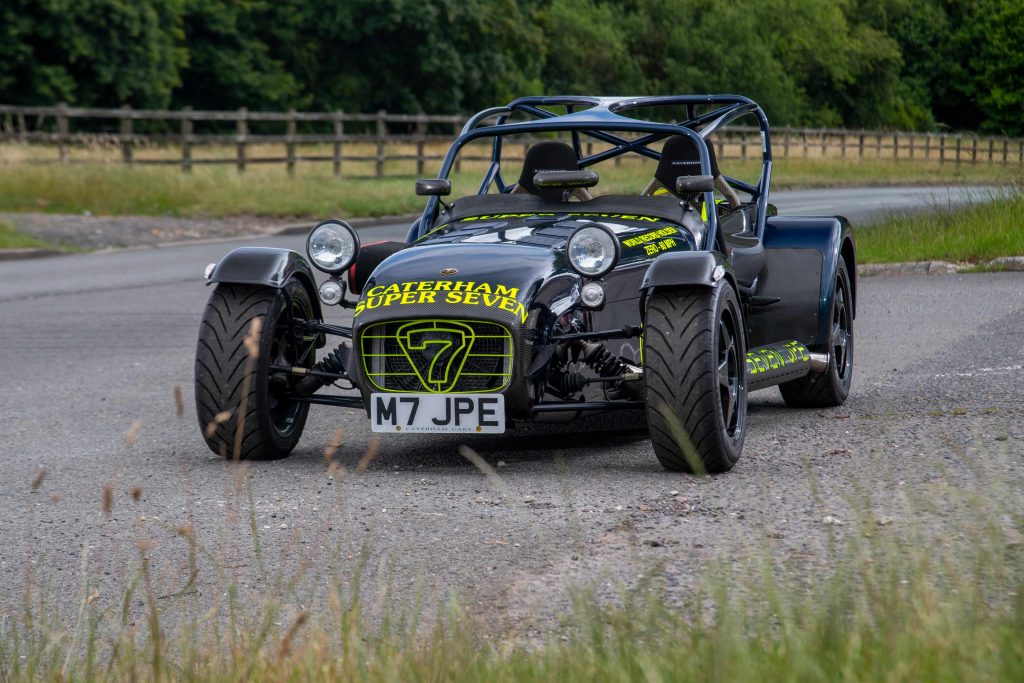
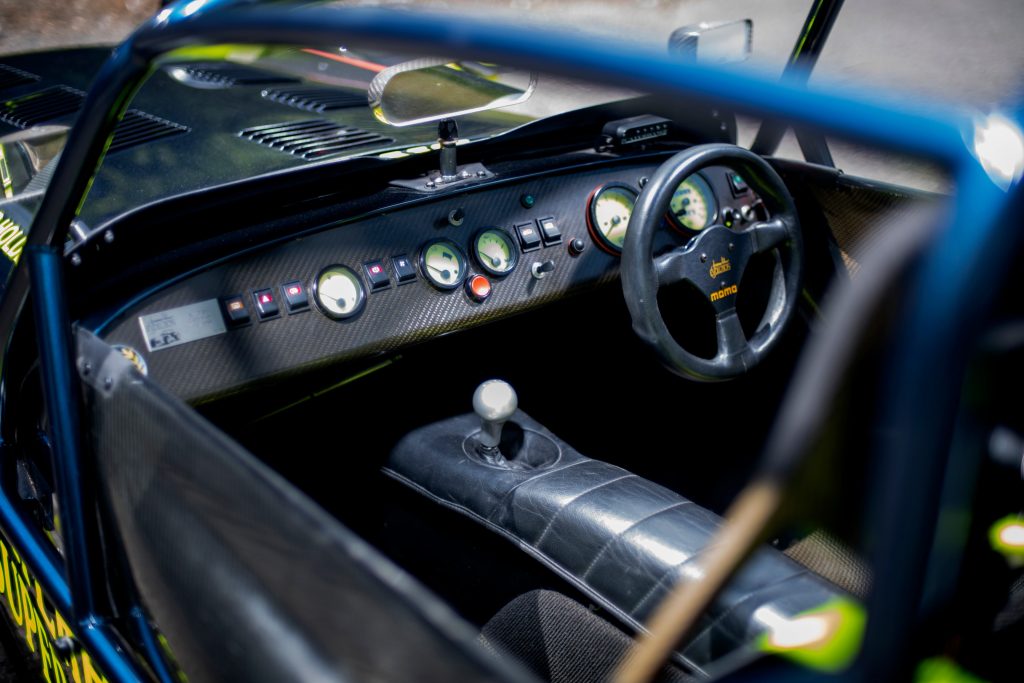
Climb aboard a JPE and you’re struck by its spartan nature – minimal cockpit, Tillet carbon‑fibre seat fixed in place, no windscreen (just an aeroscreen) and a rev counter with the critical mid‑range highlighted in green, not red. Yet for all that it demands of its driver – from the switch-like, on-off action of the clutch to the ear‑splitting rise to the rev limiter – the car delivers a balance and poise that belies its apparent role of just going quickly from a standing start.
Despite boasting featherweight Cosworth pistons, wild cams and a compression ratio of 12:1, and carrying a rather exotic looking set of inlet trumpets to channel air to the Cosworth-designed cylinder head, the first surprise is how tractable the engine is. The touring car specification lump had Weber Alpha fuel injection added to make it driveable, and it shows. It pulls eagerly from low in the rev range, with the only hesitation, ironically, just before all hell breaks loose at about 6,500rpm.
That hesitation is a feature of the engine’s design but you’d be forgiven for imagining someone, somewhere at Swindon Racing Engines, wanted to give the driver the chance to opt out and ease off the power before entering warp speed.
When it goes, it flies. The engine spins up to the red line with an energy and enthusiasm that is entirely absent from modern motors, surging hungrily for the rev limit and forcing the 7 JPE through the air so violently that your ear drums flex from the resonance. You grimace, involuntarily, grab another gear, grimace some more, then find your face breaking into a smile as you start to appreciate that this is so much more than a 7 with a hot engine.
The brakes, gearing and handling are perfectly matched: taut, communicative and utterly without compromise. As evo magazine put it: 'The JPE feels solid, laser‑focused – the gearing, the power, the brakes and the handling (on current Avon CR500s) perfectly matched. It feels bang up to date, in fact. I love it.'
At the hands of Autocar magazine, with Derek Bell a the wheel, the JPE managed a 0–100‑0mph in 13.1 seconds, nearly three seconds quicker than the benchmark held by the Ferrari F40. You can take a trip down memory lane, below…
Where the JPE fits in the Seven family tree
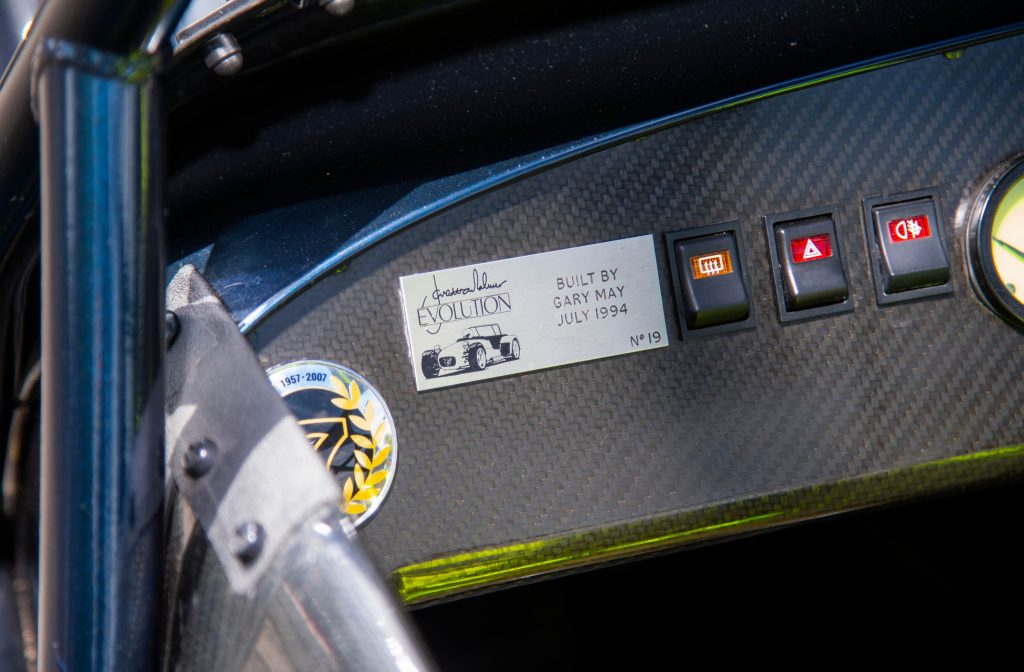
The Seven’s roots trace back to the lightweight Lotus Seven of 1957 – the minimalist sports car with just enough power to excite and a chassis that rewarded finesse. Over time, Caterham expanded the concept into a broad range of variants, from stripped‑out Series 2 cars to high‑power road and track specials.
What makes the JPE distinct is how it amplifies that philosophy: the engine’s BTCC‑derived character, the power at high revs and the directness of the chassis put it at the extreme end of Caterham’s spectrum, yet somehow it remains a car that is still cohesive and beguiling.
In the words of evo: “The JPE stands out as a real keeper. It feels competitive with the fastest models produced today, it’s genuinely exotic and there are limited numbers out there.”
Just 53 JPEs were built, making them rare and highly desirable today. Many went to Japan and France, leaving only a handful in the UK. Those surviving examples remain reminders of an era when performance was defined more by ingenuity than by electronics or wind tunnels.
In a world where many cars are measured by their lap times or tech spec sheets, the Caterham 7 JPE reminds us that sheer engagement – the blend of sound, speed, light weight and physical feedback – is what makes every drive unforgettable.
For car enthusiasts and collectors looking for something truly remarkable, a JPE deserves a place in a collection of 1990s masterpieces.
If you would like to know more about Racing Green’s services, or arrange for your car to be placed in our care, please speak with a member of the team, on 03330 909722, or email us at enquiries@racinggreencarstorage.co.uk

View Gallery

Subscribe
Sign up to our newsletter to get all the latest news, events and more from the Racing Green team.
By filling out this form, you agree to the terms laid out in our privacy policy

Redefining collector car storage

By filling out this form, you agree to the terms laid out in our privacy policy


Let's start a conversation...
Please note: Your comments will need to be approved before they are shared with our community. Have fun. Don't be rude or mean. Feel free to criticise ideas, not people. Bad behaviour will not be tolerated.
Lorem ipsum dolor sit amet, consectetur adipiscing elit. Suspendisse varius enim in eros elementum tristique. Duis cursus, mi quis viverra ornare, eros dolor interdum nulla, ut commodo diam libero vitae erat. Aenean faucibus nibh et justo cursus id rutrum lorem imperdiet. Nunc ut sem vitae risus tristique posuere. uis cursus, mi quis viverra ornare, eros dolor interdum nulla, ut commodo diam libero vitae erat. Aenean faucibus nibh et justo cursus id rutrum lorem imperdiet. Nunc ut sem vitae risus tristique posuere.
Delete